
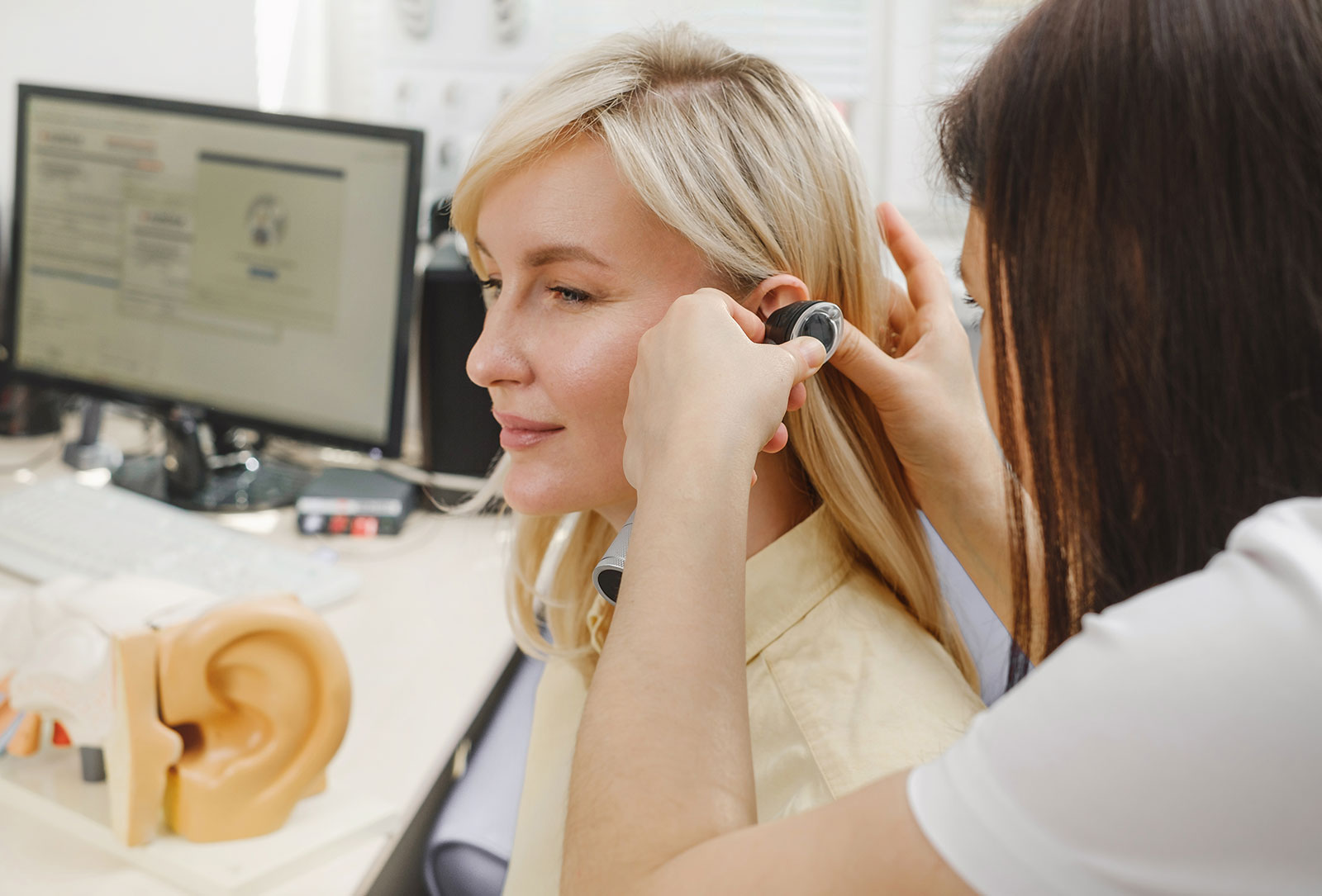
Audiometry
Regular workplace audiometry (hearing) testing is an essential part of protecting your employees from Noise-Induced Hearing Loss (NIHL) — one of the most common and preventable occupational health issues in UK workplaces.
Our expert clinical team delivers compliant audiometry services nationwide, helping employers confidently meet their legal duties under the Control of Noise at Work Regulations 2005.
What Is Audiometry?
Audiometry is a specialised hearing screening test that is is required under the Control of Noise at Work Regulations, 2005. It measures an individual’s hearing sensitivity across a range of speech-relevant frequencies.
The test produces an audiogram — a clear visual report of hearing thresholds — which allows clinicians to assess whether someone’s hearing has deteriorated due to workplace noise exposure.
Health surveillance is required for noise hazards where your noise survey has highlighted that:
– Exposure is over 80dB(a) and the individual is known to be at risk e.g. they already suffer from hearing loss or are particularly sensitive to damage
– Exposure is over 85dB(a)
This test forms a vital part of a health surveillance programme required when employees are exposed to significant noise levels in the workplace.

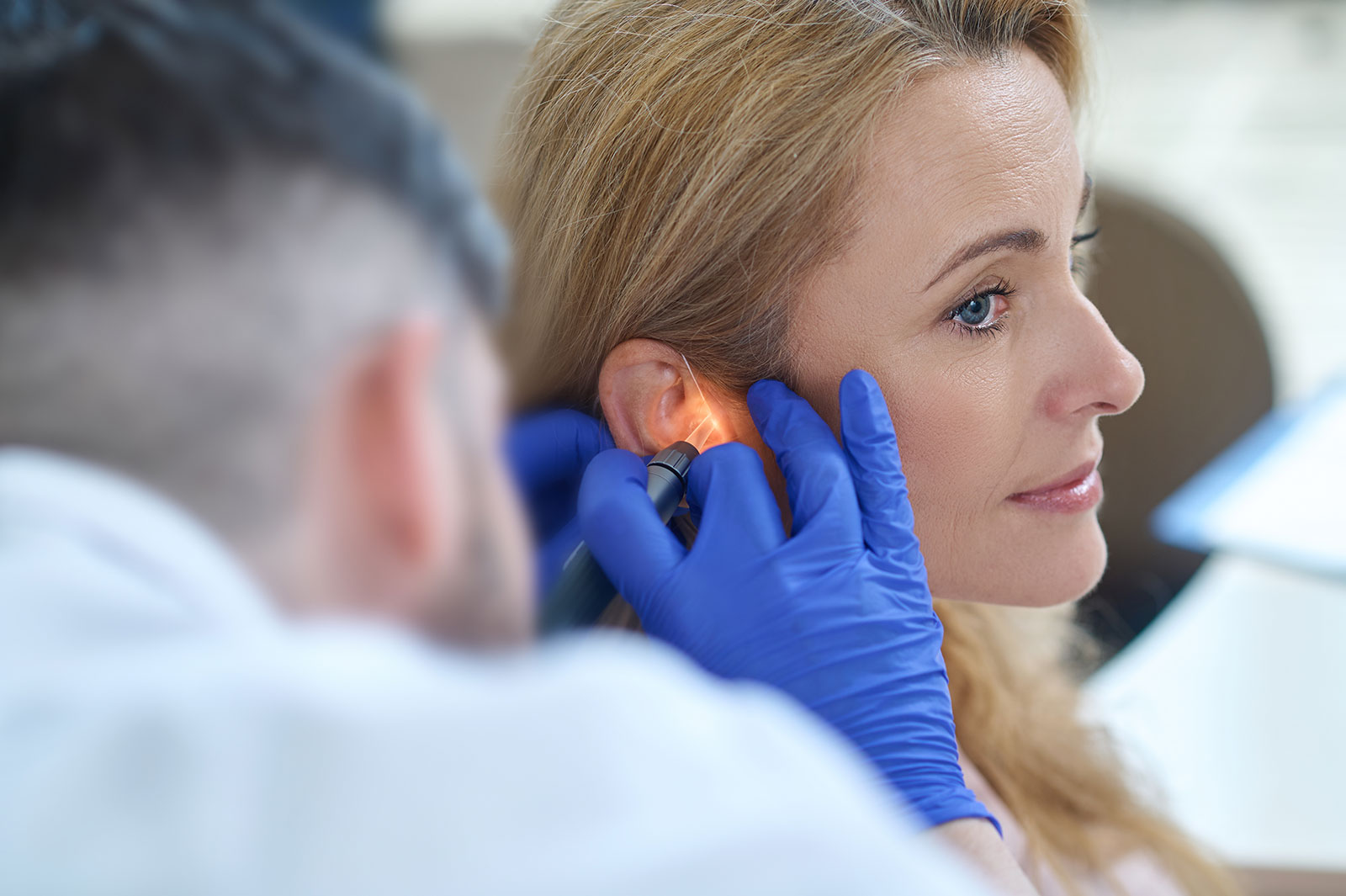
What to Expect from Our Audiometry Service
Pre-Test Preparation
– Clinical review of risk, exposure and prior test history
– Ear examination and check for temporary conditions (e.g. wax)
Pure-Tone Audiometry Testing
– Conducted in a sound-controlled environment
– Frequencies tested across the speech range
– Results plotted on an audiogram for clinical interpretation
Professional Interpretation & Reporting
– Categorisation of results using recognised HSE frameworks
– Immediate feedback to employees with guidance
– Actionable reports for employers with recommended next steps
Workplace Support & Advice
– Practical recommendations on hearing protection
– Linkage to wider workplace noise and health surveillance strategies
We support businesses of all sizes, with options for On-Site Mobile Health Units to minimise disruption or clinic-based appointments where preferred.
Download our Free Guides
Step by Step guides to implementing a Health Surveillance Programme.

Health Surveillance Brochure
Protecting employees through proactive, nationwide health surveillance that prevents risks and promotes workplace wellbeing.
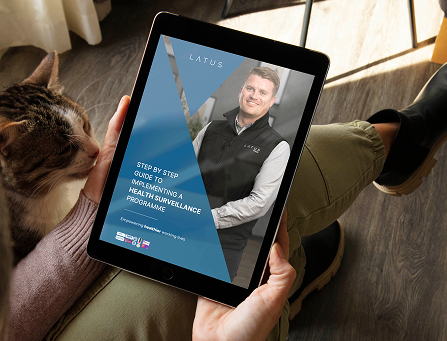
Implementing a health surveillance programme
Step-by-step guidance to design, implement, and maintain effective, compliant health surveillance across your workforce.
- When Is Audiometry Required?
- Why Audiometry Matters
- Is it a legal requirement?
- How frequently should I do hearing tests?
- What if employees have a hearing problem?
- What about earphone induced hearing loss?
When Is Audiometry Required?
Audiometric testing is required as part of health surveillance under UK regulations where:
– Employees are exposed to noise at or above 85 dB(A)
– Exposure is frequent and prolonged
– A noise risk assessment or noise survey indicates potential harm
Your occupational noise survey will guide whether audiometry is necessary and how often tests should be repeated.
Why Audiometry Matters
– Detect early signs of hearing damage before it becomes permanent.
– Monitor trends over time and assess whether noise control measures are effective.
– Support compliance with UK law for noise hazards at work.
– Provide accurate, actionable results to protect your workforce and reduce organisational risk.
Unlike general health checks, audiometry directly informs whether hearing protection and noise controls are working and whether adjustments are needed.
Is it a legal requirement?
This is a requirement of the Control of Noise at Work Regulations.
How frequently should I do hearing tests?
Frequency isn’t one-size-fits-all. As a general guide:
– Baseline hearing test is recommended on commencement of exposure or as soon as possible. (Quarry Regulations require baselines to be done prior to commencement).
– Annual hearing tests should continue for 2 years after commencement.
– 3 yearly hearing tests can then be done if the hearing test results are stable, if not a review of exposure and annual hearing tests are recommended until the hearing loss is stable.
We tailor a schedule that matches your risk profile and regulatory obligations.
What if employees have a hearing problem?
If employees are identified with a hearing deficit or problem, you will need to think about what risks this may pose in their work activities. We strongly recommend that you involve each employee with their personal risk assessments – talk to them about their individual needs and ask them whether they are experiencing difficulties at work. Remember to reassure them that you are looking to help as they may be concerned about their job security and not flag health issues.
- Can they hear audible warning alarms such as fire alarms? – check their response to an unexpected alarm and if they don’t appear to respond, discuss your concerns with them. Explore alternative options such as high-intensity strobe lights or vibration pads.
- Can they hear warning shouts, vehicle reversing alarms or horns? – check their response to an unexpected alert and if they don’t appear to respond, discuss your concerns with them. Explore alternative options such as a ‘buddy’ system, or other technologies to enhance the alarm systems.
- Can they hear in meetings or training sessions? – ensuring the trainer is aware of the need to speak clearly and facing the individual may be all that is required. Explore alternative options such as an interpreter, one speaker at a time rules, seating plans, voice mics, sound loops etc.
- Can they hear on the telephone? – amplified telephones or telephone amplifiers and an extension ring can be used to boost handset volume and control tones to help make the call sound clearer. Some phones have a bright light that flashes when the phone rings and some have hearing aid compatibility that means the phone works with most hearing aids that have a hearing loop (T) setting. Most smartphones have key accessibility features for people with hearing loss. Features usually include enhanced audio for phone calls and for hearing aid wearers. There may be a loop / telecoil function / hearing aid setting on the device. Consider these options when contracting phones.
- Are they included at work? – hearing impairments can cause social isolation. It may be that they cannot hear the conversation, but also they may have to put more effort in to keep up with a conversation. They may need more visual cues to put context together to understand the topic of conversation. Reducing background noise in the rest rooms or providing awareness training for colleagues may be helpful.
Action on Hearing Loss gives an overview of products and technology available to help individuals in the workplace.
What about earphone induced hearing loss?
Noise-induced hearing loss can be caused by work or leisure activities, such as the use of earphones, attending music festivals or gigs, riding a motorbike, shooting etc.
To protect against unfair claims, you will need evidence of your noise surveys, employee exposure, control measures, employee training, ear protection issue and health surveillance.
We can support you with the audit of your processes to ensure you have evidence that you have fulfilled your duty of care and compliance obligations.
Let’s Get You Started
Our occupational hygiene specialists will guide you from first contact to full deployment without the jargon, delays, or disruption. Complete our quick form and our team will be in touch.
 Sector specific expertisePersonalised partnership tailored to your needsPackages suited to your industry requirementsBespoke account management modelFocus on Data, Sustainability & InnovationLargest Mobile Medical Fleet in UKOnly UK provider to offer Mobile Chest X-RayHundreds of Technicians working across UK & ROI