

Local Exhaust Ventilation or LEV is used to carry away any harmful dust, mist, fumes or gas in the air. COSHH (Control of Substances Hazardous to Health) Regulations require most LEV systems to be thoroughly tested at least once every 14 months.
Local Exhaust Ventilation Testing (LEV)
This applies to oil mist, wood, welding fumes, shot blasting, smoke and dust extraction units that are form part of the control measures.
The LEV examination must meet HSE Standards and be undertaken by a competent person.
“Regulation 9 of COSHH requires that any control measure taken to comply with regulation 7 must be maintained in an efficient state, in efficient working order and in good repair. LEV systems should be examined and tested at least once every 14 months.”
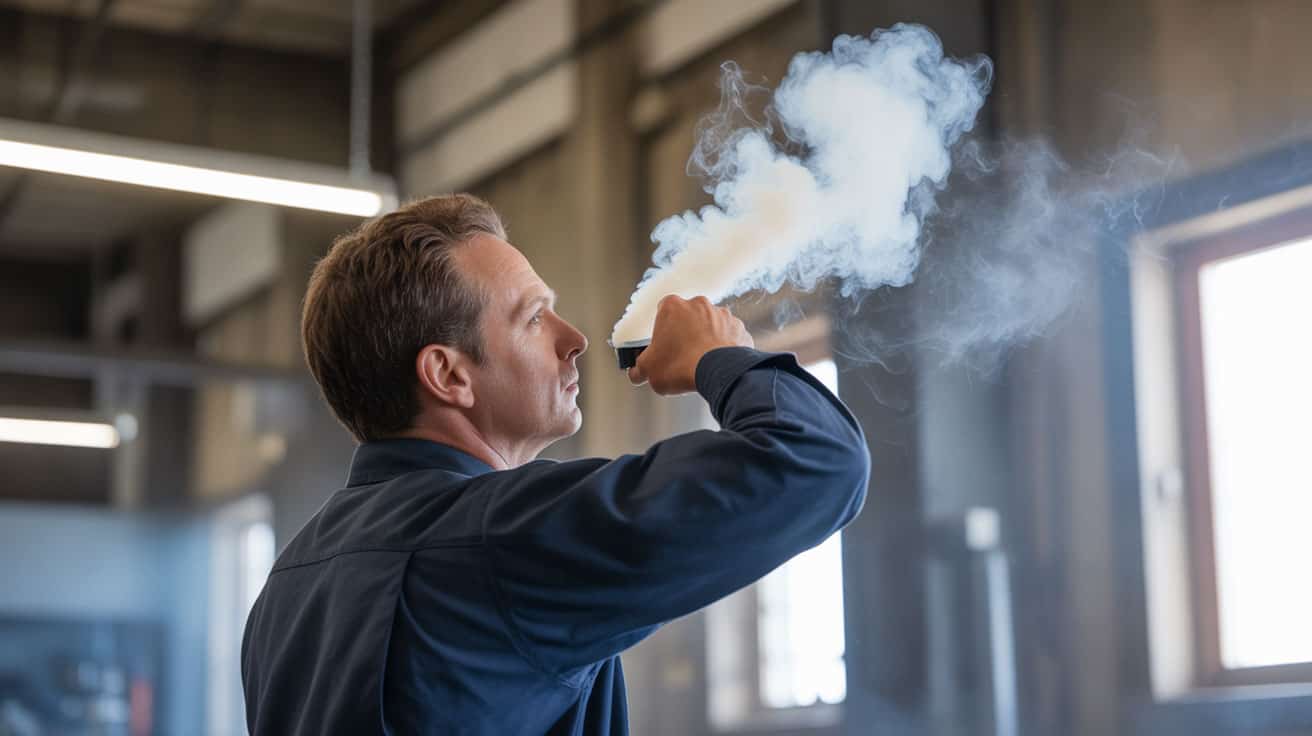
LEV examination and test procedure
The examination and test procedure and methods are similar to the original commissioning exercise, with similar qualitative and quantitative methods. Thorough examination and testing of LEV can be considered to comprise three stages:
- Stage 1 – A thorough visual and structural examination to verify the LEV is in efficient working order, in good repair and in a clean condition.
- Stage 2 – Review of the technical performance to check conformity with commissioning or other sources of relevant information.
- Stage 3 – Assessment of control effectiveness
The Occupational Hygiene team at LATUS ensure that your LEV systems are meeting the criteria for an efficient control measure often supporting this with our experienced air monitoring Occupational Hygienists. We believe that your assessment of all control measures should be viewed holistically and not as standalone individual assessments.
We provide support to assist you in reviewing all aspects of your approach to keep your workforce safe from commissioning data, measurement assessments and review of health surveillance outcomes.
Breathing apparatus air quality testing
Air supplied to breathing apparatus must be clean and safe to breathe. The wearer’s life depends on it.
Compressed air for breathing apparatus and air-fed respiratory protection normally originates from a compressor system. These can generate and concentrate a wide range of contaminants which can cause harmful or toxic effects.
Control of Substances Hazardous to Health (CoSHH) Regulations and BS EN 12021:2014 Respiratory equipment, require the testing of compressed air for breathing apparatus at least every three months or more frequently if there has been any changes or concerns.
The standards for compressed gas for breathing are:
| Oxygen | 21 (+/-1) % |
| Carbon Monoxide | <5ml/m-3 (ppm) |
| Carbon Dioxide | <500ml/m-3 (ppm) |
| Oil | <0.5mg/m-3 (ppm) |
| Water vapour | Dew point 50c lower that likely temperature or -110c |
| Water liquid | No free water |
| Odour/taste | Without significant odour or taste |
| Observation | No damage to airline, purifying systems, connecting nozzles, |
Download our Free Guide
Guide to Occupational Hygiene
Protecting employees through proactive, nationwide health surveillance that prevents risks and promotes workplace wellbeing.
Let’s Get You Started
Our occupational hygiene specialists will guide you from first contact to full deployment without the jargon, delays, or disruption. Complete our quick form and our team will be in touch.
 Sector specific expertisePersonalised partnership tailored to your needsPackages suited to your industry requirementsBespoke account management modelFocus on Data, Sustainability & InnovationLargest Mobile Medical Fleet in UKOnly UK provider to offer Mobile Chest X-RayHundreds of Technicians working across UK & ROI