

Medics have warned of rising numbers of silicosis in the UK, following confirmation of the country’s first recorded death linked to exposure from artificial stone, silicosis from fake marble & granite. Importantly, this emerging occupational health risk is affecting younger workers, some with only a few years’ exposure, and has serious implications for UK employers operating in construction, stone fabrication and related sectors.
This article explores what is driving this increase, why it matters to employers, and how appropriate health surveillance can help organisations meet their legal duties while protecting workers’ long-term health.
Have you screened your workers?
Book your Mobile Chest X-ray appointment now!
What is silicosis and why is it re-emerging in the UK?
Silicosis is a progressive and incurable lung disease caused by inhaling respirable crystalline silica (RCS) dust. Over time, silica particles trigger inflammation and scarring within the lungs, which reduces lung capacity and impairs oxygen transfer.
Traditionally, silicosis was associated with heavy industries such as mining and quarrying. However, in recent years, cases have increasingly been linked to cutting and polishing high-silica artificial stone, widely used for kitchen and bathroom worktops. As a result, clinicians are now seeing a disease once thought to be in decline re-emerge in modern workplaces.
What is silicosis?
Silicosis is a serious occupational lung disease caused by inhaling fine silica dust. It leads to irreversible lung scarring, breathing difficulties and, in severe cases, premature death. There is no cure, making prevention and early detection critical.
The UK’s first death linked to artificial stone exposure
A recent UK clinical study has confirmed the country’s first death from artificial stone silicosis, alongside a further 11 diagnosed cases. Worryingly, the average age of those affected was just 34 years old, with some individuals having worked with artificial stone for as little as four years.
Doctors have also observed that the disease may continue to worsen even after exposure stops. Consequently, clinicians have compared the current trajectory to historic occupational diseases such as asbestosis and mesothelioma, where early warnings were not acted on quickly enough.
Now a law firm, Leigh Day solicitors, have stated they are taking on lawsuits from men as young as their 20s who have developed the illness, with the new study reporting the first eight cases of silicosis in men aged between 27 and 56.
Why artificial stone is particularly dangerous
Artificial or engineered stone can contain more than 90% crystalline silica, compared with much lower levels in natural granite or marble. Therefore, cutting, grinding or polishing these materials can release extremely high concentrations of airborne silica dust if controls are inadequate.
High-silica artificial stone, is popular in kitchen and bathroom renovation because it can be made to look like marble or granite but is much cheaper.
Although the UK has strict exposure limits, enforcement and compliance remain challenging. By contrast, countries such as Australia have already introduced a full ban on high-silica engineered stone, following similar patterns of disease.
Study author Dr Johanna Feary, lung disease expert at the Royal Brompton NHS trust in London, said: “The emergence of these cases is of real concern.” particularly because there is no effective treatment once silicosis develops.
Which UK workers are most at risk?
Workers at increased risk of silica exposure include:
-
Stonemasons and stone fabricators
-
Construction and demolition workers
-
Kitchen and bathroom worktop installers
-
Tile, brick and ceramic workers
-
Quarry and foundry workers
In practice, any role involving cutting, drilling or grinding silica-containing materials may present a risk. Therefore, employers must ensure exposure is adequately assessed and controlled.
Legal responsibilities for UK employers
Under the Control of Substances Hazardous to Health Regulations (COSHH), employers have a legal duty to assess, prevent or adequately control exposure to hazardous substances such as silica dust.
The Health and Safety Executive (HSE) sets a Workplace Exposure Limit (WEL) for RCS of 0.1 mg/m³ as an 8-hour time-weighted average. However, where there is a reasonable likelihood of silicosis developing, health surveillance must also be provided.
This duty is reinforced by the Health and Safety at Work etc. Act 1974, which requires employers to protect employees’ health so far as is reasonably practicable.
You can read the HSE’s official guidance on silica exposure and health surveillance on the GOV.UK website.
Why health surveillance is critical as cases rise
With rising numbers of silicosis in the UK, health surveillance plays a vital role in early identification of lung changes, even before symptoms become severe. Importantly, early detection can prompt further investigation, exposure reduction and redeployment where necessary.
Guidance from the Health and Safety Executive (HSE) recommends that all workers exposed to respirable crystalline silica (dust containing small particles of sand) should be included in a Health Surveillance program, overseen by a competent occupational health professional. This may include respiratory questionnaires, lung function testing and, where clinically indicated, chest X-rays.
How Latus Group supports silica-exposed workers
Latus Group works with employers across the UK to deliver compliant, practical health surveillance for silica-exposed workforces. Importantly, this support is designed to integrate with existing site operations and shift patterns.
Relevant services include:
Mobile chest X-ray screening: practical and compliant
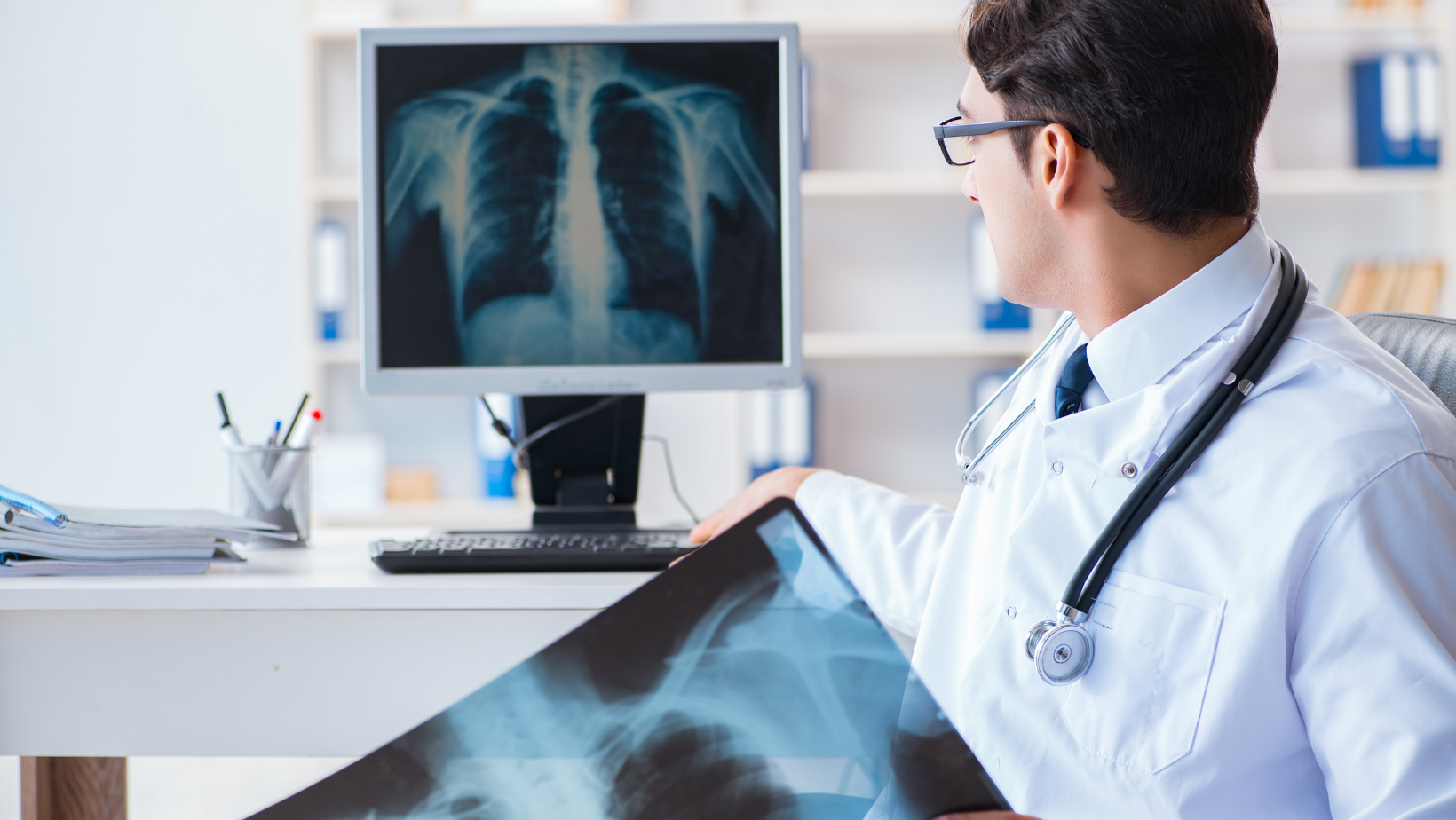
Latus Group also provides a mobile, on-site chest X-ray service, supporting employers where chest imaging forms part of an agreed surveillance programme.
From a practical perspective, this approach minimises downtime while ensuring employees receive timely screening. Typically:
-
Each X-ray takes around 10 minutes
-
Up to 30 employees can be screened per day
-
Digital radiography equipment provides high-resolution images with very low radiation doses
Following clinical review, both the employee and employer receive outcome letters outlining results and recommended next steps within the health surveillance programme.
You can find further information about occupational lung disease screening via the NHS and HSE guidance pages.
What UK employers should do now
Given the seriousness of silicosis and the emerging evidence, employers should act proactively. In practice, this means:
-
Reviewing COSHH risk assessments for silica exposure
-
Ensuring engineering controls and PPE are effective
-
Implementing appropriate health surveillance where required
-
Seeking occupational health advice if exposure cannot be eliminated
Taking action now not only protects workers’ health but also demonstrates compliance with UK health and safety law.
Conclusion: acting early protects lives and businesses
The confirmation of the UK’s first death from artificial stone silicosis is a stark reminder that modern materials can carry serious, long-term health risks. As evidence continues to emerge, rising numbers of silicosis in the UK underline the importance of prevention, enforcement and early detection.
By working with an experienced occupational health provider and implementing robust health surveillance, employers can protect their workforce, meet their legal duties and avoid repeating the mistakes seen with historic occupational diseases.
Latus Group offers a mobile chest x-ray service, screening workers on-site and giving employers and employees the reassurance they need.

Interested in speaking to an Occupational Health expert?
Complete our enquiry form and a member of the team will be in touch
